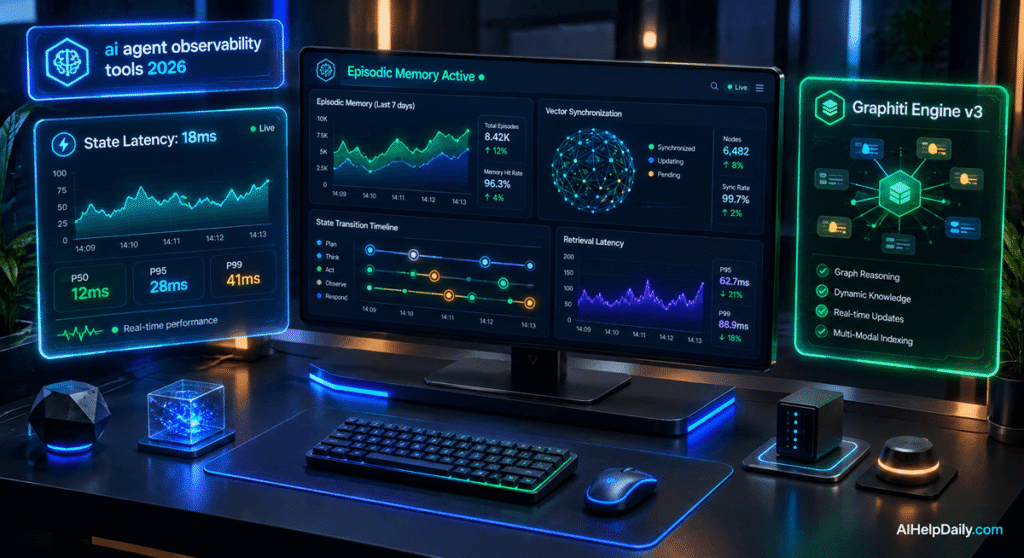
AI agent observability tools have become the essential backbone of production software engineering in 2026, allowing engineering teams to monitor multi-step reasoning traces, eliminate non-deterministic failure modes, and control runaway LLM costs. In this detailed architectural evaluation, we benchmark the top telemetry and evaluation platforms to help you debug autonomous agents, measure precision scoring, and maintain enterprise reliability across high-frequency generative workflows.
Table of Contents
The Black Box Bottleneck: Introduction
Deploying autonomous agents into production environments introduces an inherent challenge: non-deterministic execution paths. Unlike standard deterministic microservices, multi-turn generative agents execute dynamic tool-calling loops, multi-agent debates, and conditional memory lookups. When an agent hallucinates, enters an infinite execution loop, or triggers an incorrect API payload, traditional application performance monitoring (APM) tools like Datadog or New Relic fail to capture the underlying prompt semantics or reasoning step failures.
Modern ai agent observability tools bridge this operational gap by introducing granular execution tracing, automated continuous evaluation pipelines, and unified session-level cost accounting tailored specifically for LLM-driven systems in 2026.
Key Parameters: Evaluating Agent Observability Platforms
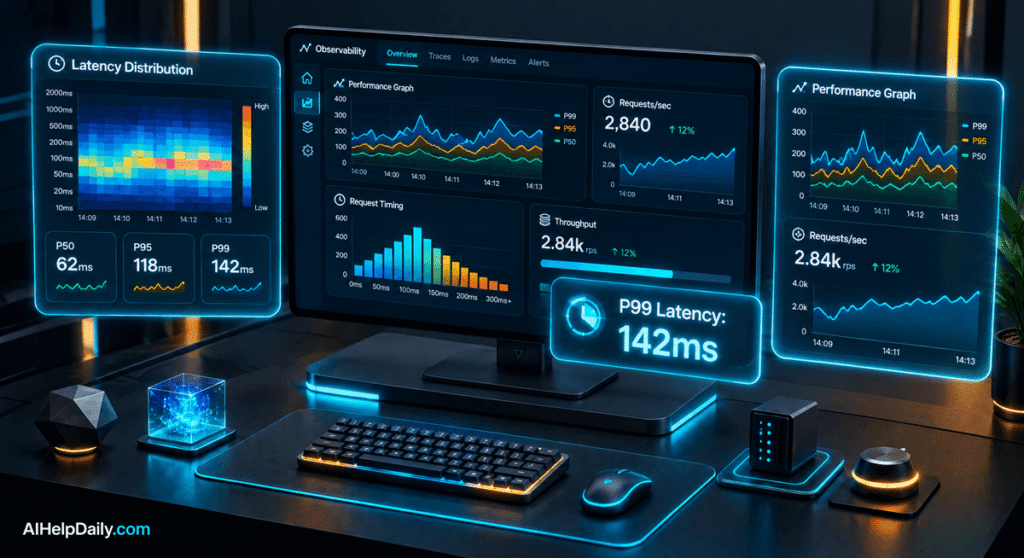
To identify the best ai agent observability tools for enterprise deployments, engineering leaders must assess four core architectural criteria:
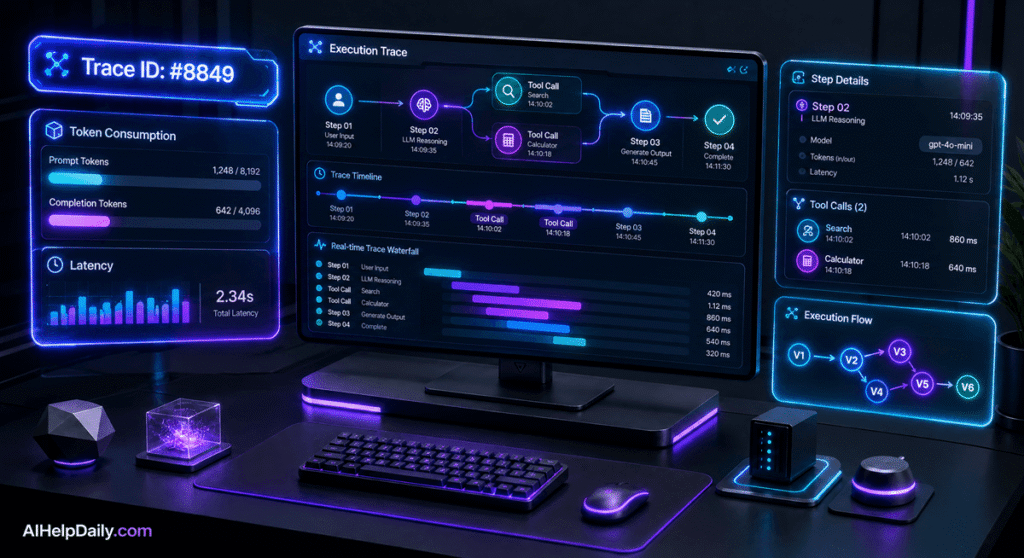
- Hierarchical Tracing: The ability to capture nested traces spanning prompt templates, retrieval-augmented generation (RAG) context injections, external tool invocations, and multi-agent message routing without adding execution overhead.
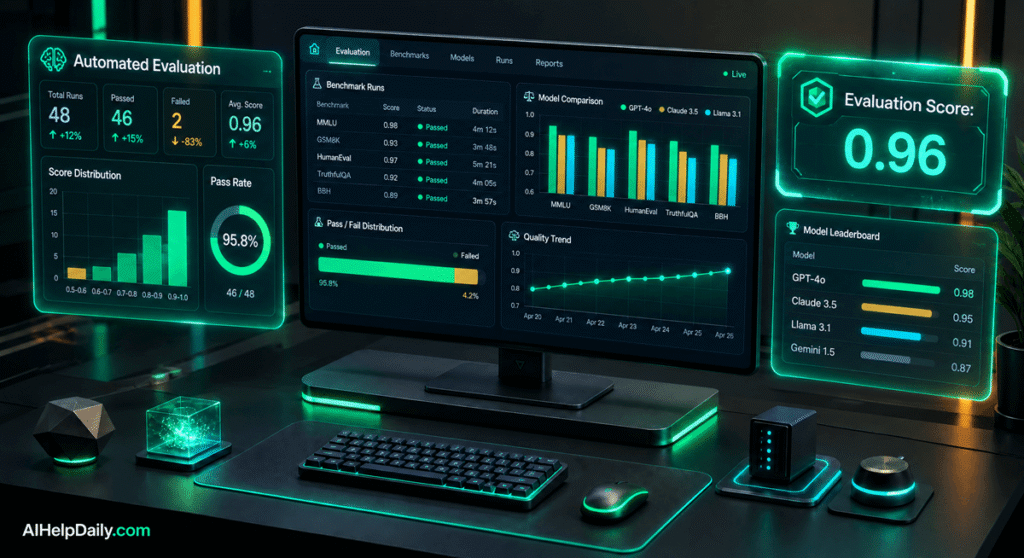
- Continuous Evaluation & Guardrails: Integrated unit testing frameworks capable of running automated synthetic benchmarks, LLM-as-a-judge scoring, and regression evaluations against golden datasets.
- OpenTelemetry Native Integration: Native compliance with open standards (such as OpenInference and OpenTelemetry), ensuring that telemetry data remains vendor-neutral and portable across monitoring backends.
- Cost and Token Attribution: Granular multi-tenant cost tracking that attributes token spend, latency anomalies, and cache hit ratios down to individual users, teams, or agent task types.
The Best AI Agent Observability Tools in 2026 Reviewed
1. Langfuse (Open-Source Engineering Choice)
Langfuse has established itself as the leading open-source LLM observability platform for engineering teams prioritizing full data sovereignty and self-hosting capabilities. With lightweight SDKs for Python and TypeScript, Langfuse delivers comprehensive tracing across complex agent loops, zero-latency asynchronous event ingestion, and flexible prompt management workflows.
2. LangSmith (Deep LangChain & LangGraph Synergy)
Developed natively by the LangChain team, LangSmith offers frictionless telemetry, dataset curation, and automated testing for developers building with LangGraph and LangChain. Its native graph visualization allows engineers to replay agent traces node-by-node, debug state variables at each step, and construct regression testing suites with zero manual instrumentation.
3. Arize Phoenix (Enterprise OpenTelemetry & RAG Analytics)
Arize Phoenix delivers an enterprise-grade, OpenInference-native observability platform focused heavily on embedding visualization and automated RAG evaluation. By projecting document embeddings into interactive spatial maps, Phoenix enables teams to spot semantic drift, retrieval blind spots, and hallucination clusters across massive production deployments.
4. Braintrust (Enterprise Evaluation & Production CI/CD)
Braintrust is built from the ground up as an integrated continuous evaluation and LLM CI/CD platform. Designed for fast-moving product teams, Braintrust allows developers to evaluate prompts, test automated agent actions against structured metrics, and run high-velocity regression benchmarks before merging changes to production.
5. Helicone (High-Performance Proxy & Cost Control)
Helicone operates as a high-speed, zero-code LLM proxy layer that can be integrated by changing a single base URL. It delivers instant real-time cost tracking, automated semantic caching to reduce token spend, rate-limiting rules, and basic trace captures, making it an exceptional first-line defense for production cost management.
Functional Deployment Across Enterprise Stacks
To help you select the ai agent observability tools that match your compliance needs, deployment architecture, and budget, evaluate this capabilities matrix:
| Platform | Deployment Model | Core Strength | Key Evaluation Focus | Best Suited For |
|---|---|---|---|---|
| Langfuse | Open-Source / Self-Hosted / Cloud | Data sovereignty & modular SDKs | Nested multi-agent tracing & feedback loops | Privacy-first enterprise teams & independent devs |
| LangSmith | Managed Cloud / Enterprise Private | Native LangGraph execution replay | Step-by-step state debugging & dataset curation | Teams built primarily on LangChain frameworks |
| Arize Phoenix | OpenInference / Self-Hosted / Cloud | Vector embedding drift & RAG diagnostics | Hallucination clustering & retrieval precision | Data science and enterprise RAG architects |
| Braintrust | Enterprise Cloud / On-Premise | Production CI/CD evaluation suites | Automated regression benchmarking & scoring | High-velocity enterprise AI product teams |
| Helicone | Lightweight Smart Proxy / Cloud | One-line URL proxy integration & caching | Token cost attribution & latency reduction | Fast deployment teams seeking instant cost control |
The Heavy Compute: Telemetry Overheads and Latency
Implementing continuous telemetry across distributed agents requires careful architectural planning to avoid inflating end-to-end latency. Asynchronous log collectors, batch telemetry shippers, and non-blocking OpenTelemetry pipelines ensure that capturing detailed reasoning traces does not degrade the responsiveness of client interactions.
This mission-critical monitoring infrastructure ties directly into our master review of the best agentic ai tools, our architectural breakdown of the best agentic ai frameworks, our dedicated best ai agent deployment platforms review, our recently updated best ai inference engines analysis, and our persistent state guide on the best ai memory tools. Balancing high-frequency telemetry data with real-time inference throughput remains a key priority for modern AI organizations.
Conclusion: The Final Verdict
Selecting among the leading ai agent observability tools depends heavily on your team’s existing architecture, governance requirements, and telemetry maturity. If you require an open-source solution that can be deployed entirely within your own cloud perimeter, Langfuse provides the best balance of flexibility and power. For organizations heavily invested in LangGraph or requiring integrated CI/CD regression benchmarking, LangSmith and Braintrust offer the most robust evaluation platforms available.
To explore more technical developer frameworks or discover platforms that scale your digital operational stack, visit our master AI Tools index or keep tabs on our continuous AI News weekly hub for ongoing industry breakdowns!