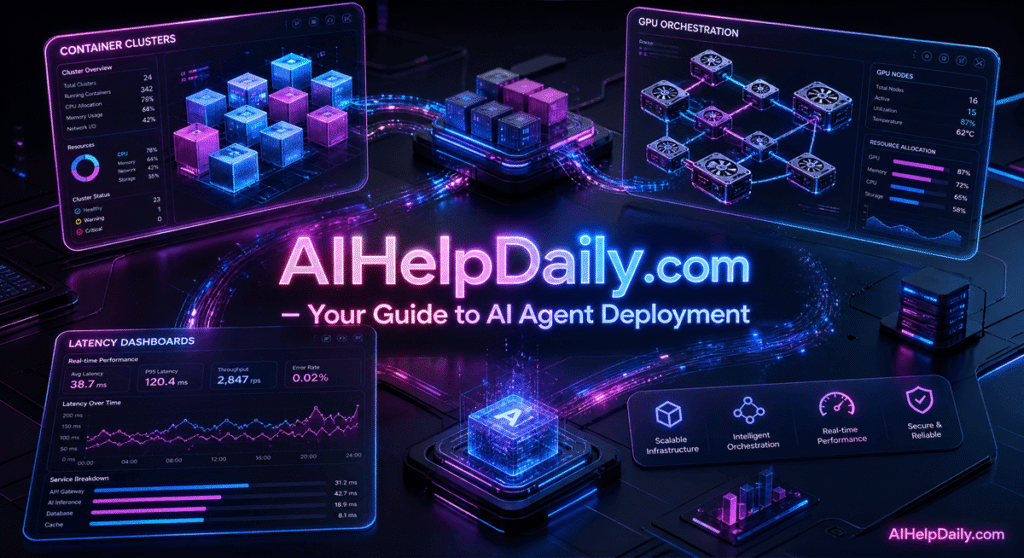
AI agent deployment platforms are fundamentally transforming how enterprise engineering teams host, scale, and secure autonomous software agents in production environments in 2026. In this detailed architectural evaluation, we benchmark top cloud hosting runtimes to help you isolate secure execution sandboxes, eliminate cold-start latencies, and manage serverless GPU infrastructure without DevOps bottlenecks.
Table of Contents
- The Cloud Runtime Shift: Introduction
- Key Parameters: Evaluating Autonomous Agent Hosting Environments
- The Best AI Agent Deployment Platforms in 2026 Reviewed
- Functional Deployment Across Cloud Architectures
- The Heavy Compute: Processing Load and Infrastructure Demands
- Conclusion: The Final Verdict
The Cloud Runtime Shift: Introduction
Deploying autonomous software agents and multi-agent workflows into reliable production environments requires fundamentally different architecture than hosting traditional web APIs. Standard virtual machines and basic serverless functions struggle to handle long-running reasoning loops, isolated code execution sandboxes, and stateful memory synchronization.
In this dedicated infrastructure evaluation, we benchmark leading cloud runtimes to rank the best ai agent deployment platforms operating in the 2026 enterprise landscape. We measure their container boot speeds, sandboxed security boundaries, serverless GPU scaling efficiency, and native orchestration framework integrations.
Key Parameters: Evaluating Autonomous Agent Hosting Environments
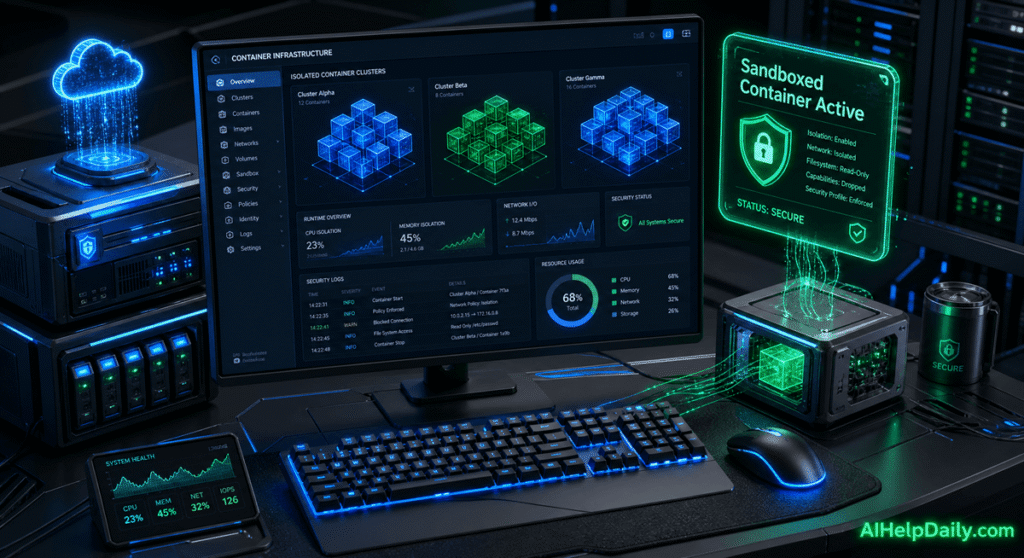
To properly evaluate modern ai agent deployment platforms, DevOps engineers and system architects must look past generic container hosting and analyze dynamic runtime isolation. A production-ready agent deployment platform must execute untrusted code in secure, isolated sandboxes.
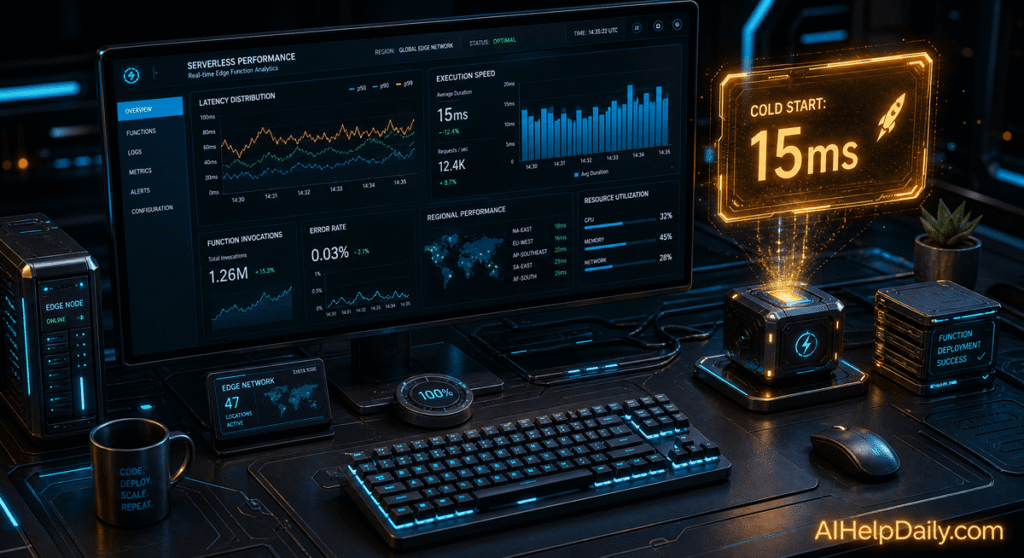
The underlying cloud infrastructure must handle long-lived WebSocket connections, scale GPU clusters to zero to eliminate idle compute costs, and provide sub-second container cold starts. Furthermore, an enterprise-grade agent hosting layer must offer built-in observability pipelines, secret management vaults, and native compatibility with frameworks like LangGraph, CrewAI, and AutoGen.
The Best AI Agent Deployment Platforms in 2026 Reviewed
1. Modal
Modal stands as the premier cloud compute platform for developers seeking serverless Python execution, instant GPU scaling, and sub-second container cold starts. Built specifically for AI infrastructure, Modal enables engineers to define cloud container environments entirely in standard Python code, scaling from zero to hundreds of concurrent GPU workers in seconds without writing Dockerfiles or managing Kubernetes clusters.
2. E2B (Code Interpreters & Sandboxes)
E2B sets the industry standard for hosting secure, isolated virtual sandboxes designed specifically for autonomous AI agents. Powered by custom lightweight Linux microVMs, E2B allows autonomous agents to run arbitrary code, browse the web, and manipulate local files inside secure ephemeral sandboxes that start in under 200 milliseconds.
3. LangSmith / LangGraph Cloud
LangGraph Cloud provides the definitive managed deployment runtime for applications built on LangChain and LangGraph architectures. Offering native multi-agent state persistence, background task queuing, and real-time execution tracing, it allows engineering teams to deploy complex stateful agent workflows with turn-key API endpoints and production governance out of the box.
4. Beam Cloud
Beam Cloud excels in simplified GPU infrastructure management, offering serverless compute pipelines tailored for high-concurrency LLM inference and long-running agent tasks. With simple CLI deployments, Beam automatically provisions hardware resources, manages API gateways, and handles persistent storage caching across distributed cloud regions.
5. Replicate
Replicate targets engineering teams looking to run open-weight AI models and autonomous agent components via simple cloud API calls. With its extensive library of production-ready machine learning models and automated hardware scaling, Replicate eliminates the need to maintain private cloud clusters for custom model inference.
Functional Deployment Across Cloud Architectures
To help you isolate the ai agent deployment platforms that best match your team’s programming language, security isolation requirements, and infrastructure budget, examine this capabilities matrix:
The Heavy Compute: Processing Load and Infrastructure Demands
Managing continuous sandboxed environments, long-running reasoning loops, and serverless GPU clusters using modern ai agent deployment platforms places substantial energy demands on global data center infrastructure. Serving concurrent multi-agent executions requires high-efficiency hardware architectures.
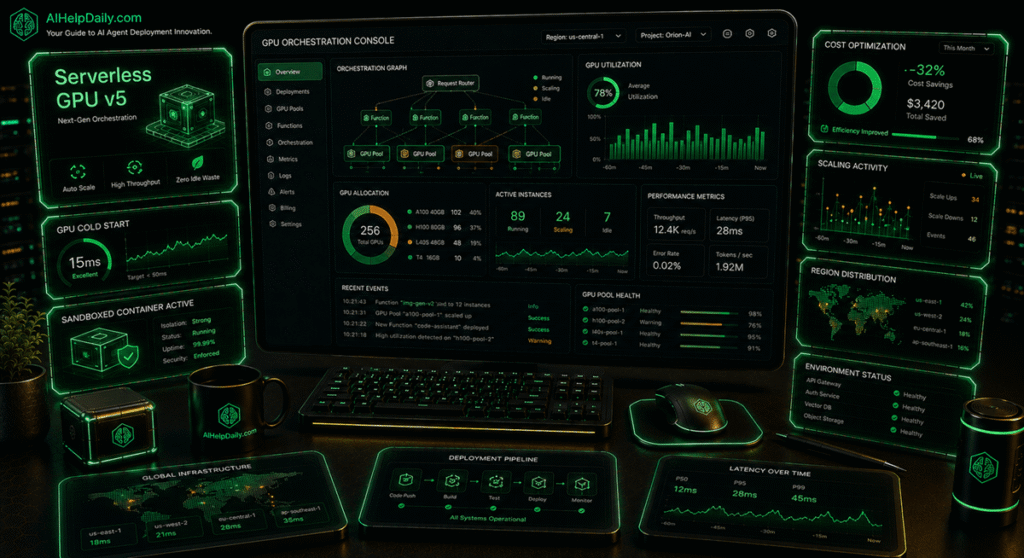
This operational compute demand connects directly back to the software infrastructure evaluations we conducted in our master best agentic ai tools guide, our best agentic ai frameworks breakdown, our best vector databases for ai agents guide, our best ai workflow automation tools review, and our recent best ai 3d generators guide. Exploring how enterprise cloud facilities manage these continuous compute workloads sustainably remains a critical priority for modern engineering organizations.
Conclusion: The Final Verdict
Selecting among top ai agent deployment platforms depends on whether your main operational focus is code execution security or serverless GPU scaling. For developer teams requiring secure, sandboxed code execution environments for autonomous agents, E2B provides an essential isolated microVM layer. However, for machine learning engineers wanting frictionless, serverless Python infrastructure with rapid GPU scaling, Modal offers the ultimate cloud runtime.
To explore more technical developer frameworks or discover platforms that scale your digital operational stack, visit our master AI Tools index or keep tabs on our continuous AI News weekly hub for ongoing industry breakdowns!