
AI inference engines are fundamentally redefining how software engineers, autonomous agent developers, and enterprise platforms serve foundation models at ultra-low latencies in 2026. In this detailed benchmark evaluation, we review top inference runtimes and specialized LPUs to help you eliminate time-to-first-token delays, scale multi-agent systems, and optimize token delivery costs.
Table of Contents
- The High-Speed Inference Shift: Introduction
- Key Parameters: Evaluating Ultra-Low Latency Inference Runtimes
- The Best AI Inference Engines in 2026 Reviewed
- Functional Deployment Across AI Hardware and Cloud Stacks
- The Heavy Compute: Processing Load and Infrastructure Demands
- Conclusion: The Final Verdict
The High-Speed Inference Shift: Introduction
The primary bottleneck for deploying interactive voice assistants, autonomous multi-agent pipelines, and real-time coding co-pilots has shifted from pure model intelligence toward raw token generation velocity. Enterprise engineering teams, developers, and founders across North America and Asia no longer accept sluggish 20 token-per-second outputs that break user flow and stall autonomous execution loops.
In this dedicated infrastructure benchmark, we test leading hardware architectures and optimized inference runtimes to rank the best ai inference engines operating in the 2026 software market. We measure their time-to-first-token (TTFT), sustained token generation throughput, multi-tenant concurrency handling, and cost-per-million-tokens efficiency.

Key Parameters: Evaluating Ultra-Low Latency Inference Runtimes
To properly evaluate modern ai inference engines, systems architects and AI engineers must look past basic API wrapper latency and analyze underlying silicon and software kernel optimizations. A production-ready inference platform must maintain sub-100 millisecond response times under peak concurrent query loads.
The underlying runtime must support advanced PagedAttention memory management, continuous request batching, dynamic quantization (FP8, INT4), and specialized compute processors such as LPUs (Language Processing Units) or custom wafer-scale chips. Furthermore, an enterprise-grade inference engine must provide strict 99.99% uptime SLAs, multi-region routing fallbacks, and native OpenAI-compatible API schemas.
The Best AI Inference Engines in 2026 Reviewed

1. Groq (LPU Inference Engine)
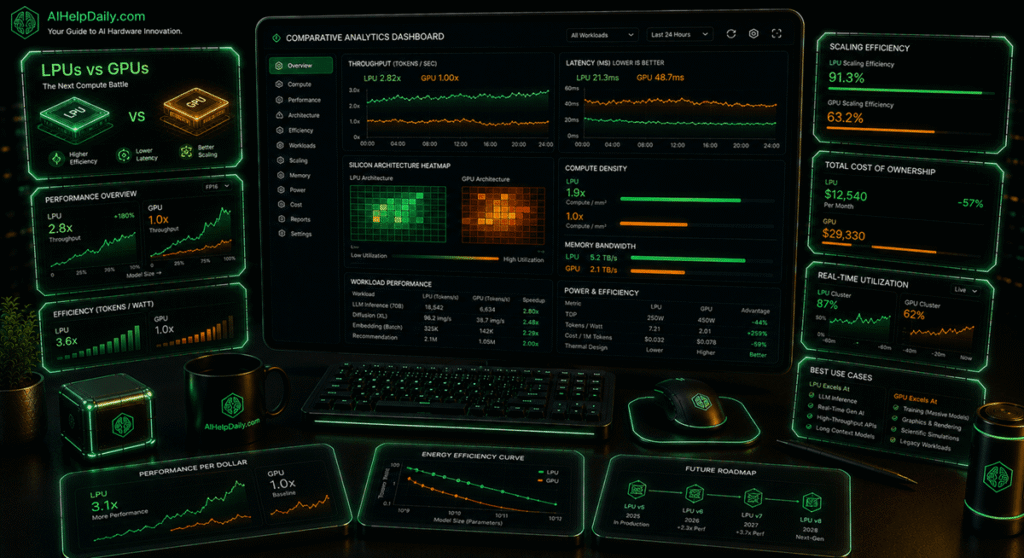
Groq stands as the undisputed industry pioneer in ultra-high-speed inference, powered by its proprietary Language Processing Unit (LPU) architecture. Designed specifically for sequential text and reasoning workloads, Groq achieves breathtaking speeds exceeding 500 to 800 tokens per second on open-weights models like Llama 3, making it the premier choice for real-time conversational agents and voice bots.
2. Cerebras Systems
Cerebras sets the standard for raw wafer-scale processing power, delivering record-breaking inference speeds via its massive CS-3 silicon hardware. By eliminating traditional memory bandwidth bottlenecks found in standard GPUs, Cerebras generates thousands of tokens per second for frontier open models, providing enterprise teams with unmatched real-time throughput.
3. Together AI (Together Inference Engine)
Together AI excels in enterprise-grade open-weights model hosting, high-concurrency API streaming, and custom LoRA adapter serving. Powered by custom CUDA kernel optimizations and FlashAttention implementations, Together AI provides developers with fast, cost-effective inference endpoints across hundreds of open-source architectures.
4. Fireworks AI
Fireworks AI targets production developers and autonomous agent builders who require lightning-fast JSON mode generation, function calling, and structured outputs. Offering sub-50ms time-to-first-token and tailored compound AI system support, Fireworks enables agents to execute multi-step tool calls with minimal latency overhead.
5. vLLM (Open-Source Runtime)
vLLM remains the premier open-source self-hosted inference runtime for engineering teams managing private GPU clusters on cloud or on-premise infrastructure. Utilizing patented PagedAttention algorithms and continuous batching, vLLM maximizes GPU memory utilization and delivers commercial-grade throughput on standard NVIDIA hardware without proprietary licensing fees.
Functional Deployment Across AI Hardware and Cloud Stacks
To help you isolate the ai inference engines that best match your throughput requirements, latency constraints, and deployment budgets, examine this capabilities matrix:
The Heavy Compute: Processing Load and Infrastructure Demands
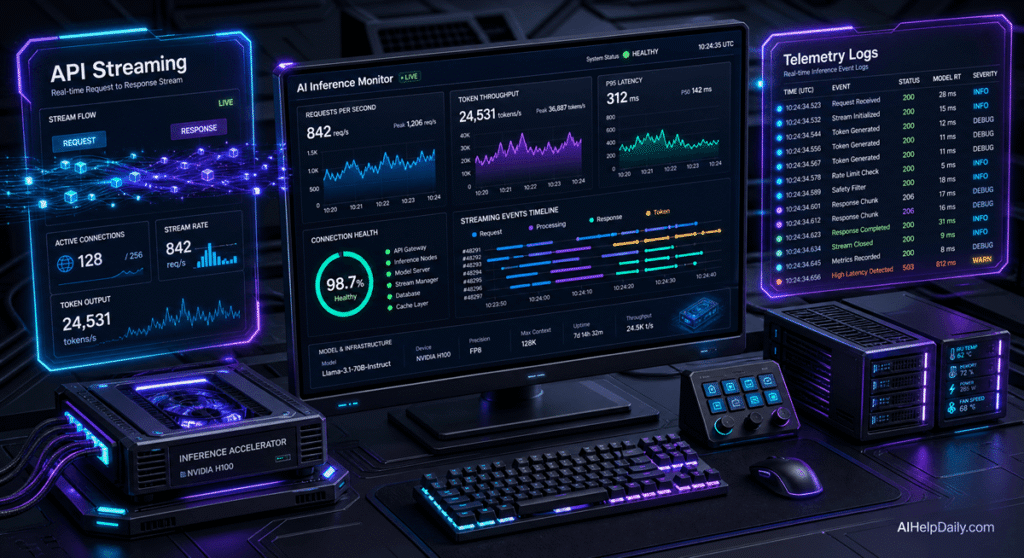
Executing millions of sustained tokens per second and maintaining continuous multi-tenant API endpoints using modern ai inference engines requires high-density datacenter power and optimized thermal management. Serving high-concurrency model queries shifts significant electrical demands onto international compute infrastructure.
This inference compute workload connects directly back to our pillar evaluations in our master best agentic ai tools guide, our best agentic ai frameworks breakdown, our best vector databases for ai agents guide, our best ai agent deployment platforms guide, and our recent best ai music generators guide. Exploring how global silicon facilities manage these continuous token generation loads sustainably remains an essential priority for next-generation hardware leaders.
Conclusion: The Final Verdict
Selecting among top ai inference engines depends on whether your platform requires managed cloud API simplicity or self-hosted cluster control. For applications demanding absolute maximum speed for conversational voice agents or real-time coding assistants, Groq and Cerebras deliver unmatched hardware velocity. However, for engineering teams managing their own private GPU cloud clusters, the open-source vLLM framework provides the ultimate self-hosted serving runtime.
To explore more technical developer frameworks or discover platforms that scale your digital operational stack, visit our master AI Tools index or keep tabs on our continuous AI News weekly hub for ongoing industry breakdowns!