Table of Contents
- The Invisible Resource: AI’s Ecological Cost
- The Science: Why Do Data Centers Need Liquid Water?
- The Quantifiable Cost: How Much Water Does AI Use?
- Comparing Models: Tracking the Resource Footprint
- The Rise of Green AI and Sustainable Computing
- Conclusion: Conscious Prompts for a Better Planet
The Invisible Resource: AI’s Ecological Cost
When we interact with complex neural systems, generate hyper-realistic videos, or deploy otonom agents to refactor code, we rarely think about the physical infrastructure behind the screen. However, as computational demands skyrocket in 2026, the question how much water does AI use has shifted from a niche academic concern to a critical global economic issue.
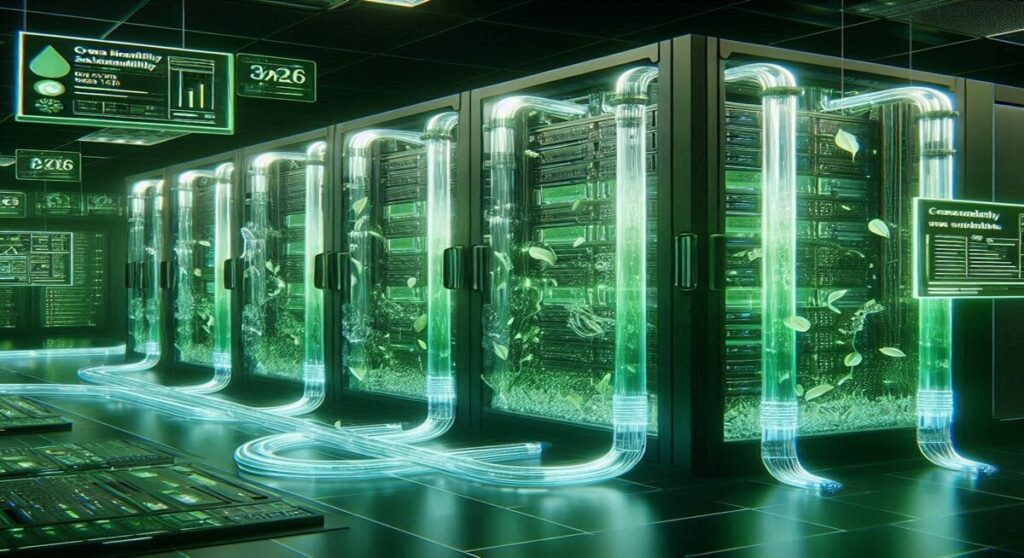
Large language models (LLMs) and deep learning matrixes don’t live in a vacuum; they reside in massive, power-hungry data centers that require thousands of gallons of resources every single day just to remain operational.
The Science: Why Do Data Centers Need Liquid Water?
To understand the core metrics behind the query how much water does AI use, we must analyze the thermodynamics of modern server clusters. Deep learning models require thousands of specialized graphics processing units (GPUs) running simultaneously at maximum capacity. This intense processing generates a massive amount of heat.
If server racks overheat, processing speeds drop (throttling), and hardware components fail prematurely. To prevent this, data centers rely heavily on cooling towers. Water is circulated through the system to absorb heat from the machinery and carry it away.
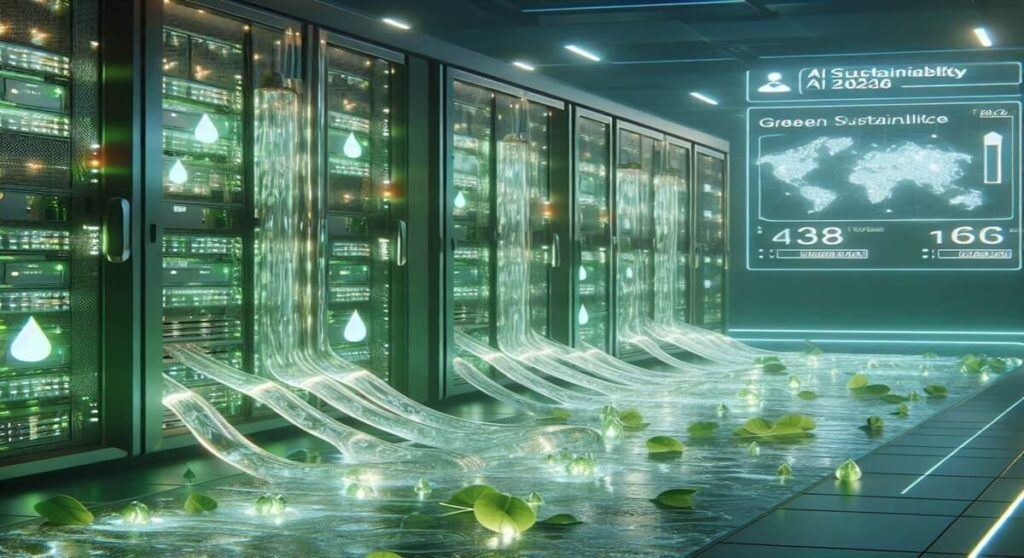
During this process, a significant portion of the water evaporates into the atmosphere, meaning it is permanently consumed from local water grids rather than being recycled immediately.
The Quantifiable Cost: How Much Water Does AI Use?
Let’s break down the actual statistical data compiled by environmental tech audits in 2026. The answer to how much water does AI use depends directly on the complexity of your prompt and the scale of the architecture processing it.
- The Single Query Cost: On average, a standard conversational interaction consisting of 20 to 50 tokens consumes roughly 500 milliliters of water (equivalent to a standard plastic water bottle).
- The Training Phase: Training a next-generation foundation model consumes an estimated 5 million to 7 million liters of fresh water. This is enough to fill multiple Olympic-sized swimming pools before the model even answers its first user query.
Comparing Models: Tracking the Resource Footprint
Not all tasks place the same stress on physical server infrastructures. The table below outlines estimated operational water footprints across various modern workflows:
| Task Type | Core Processing Requirement | Estimated Water Consumption |
|---|---|---|
| Simple Text Synthesis | Standard Token Prediction | ~500 ml per 20 prompts |
| Complex Code Optimization | Multi-File Context Compilation | ~1.5 Liters per agent loop |
| 4K Cinematic Generation | High-Fidelity Multimodal Physics | ~4 Liters per 15-second clip |
| Multi-Agent Market Scans | Continuous Parallel Scraping | ~10 Liters per automated report |
As we shift away from simple chatbots toward advanced agentic setups—like the ones explored in our Claude Code tutorial—the resource strain per user session is expected to triple over the next two years.
The Rise of Green AI and Sustainable Computing
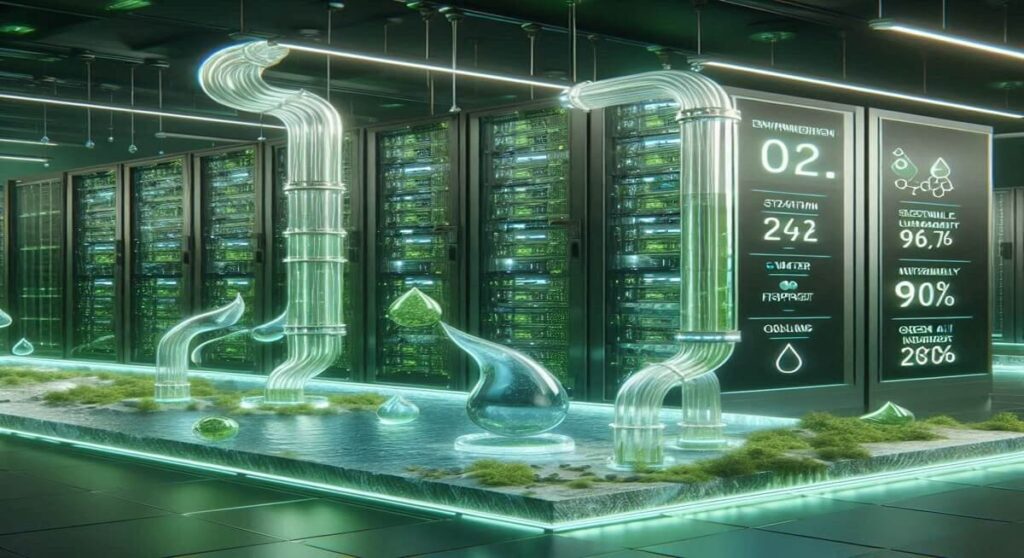
Fortunately, the tech sector is not ignoring the problem. To mitigate the rising numbers behind how much water does AI use, major cloud hosting networks are investing heavily in “Green AI” initiatives.
- Closed-Loop Liquid Cooling: Instead of evaporative cooling systems, modern 2026 data centers are moving toward closed-loop systems that reuse the same water repeatedly by chilling it with eco-friendly refrigerants.
- Geographical Relocation: Building data centers in Nordic climates or underwater allows operators to utilize ambient environmental temperatures for cooling, reducing physical water dependence to near zero.
- Algorithmic Optimization: Engineers are developing smaller, distilled, task-specific models that require a fraction of the processing power of a massive general model.
Conclusion: Conscious Prompts for a Better Planet
Ultimately, discovering exactly how much water does AI use reminds us that digital innovation always carries a physical consequence. As users, we can contribute to digital sustainability by writing precise prompts, minimizing repetitive or redundant tasks, and utilizing task-specific models when possible.
To stay updated on how the industry balances infrastructure scaling with sustainability, follow our weekly updates in the AI News section or visit our master AI Tools index to review the most resource-efficient platforms on the market today!