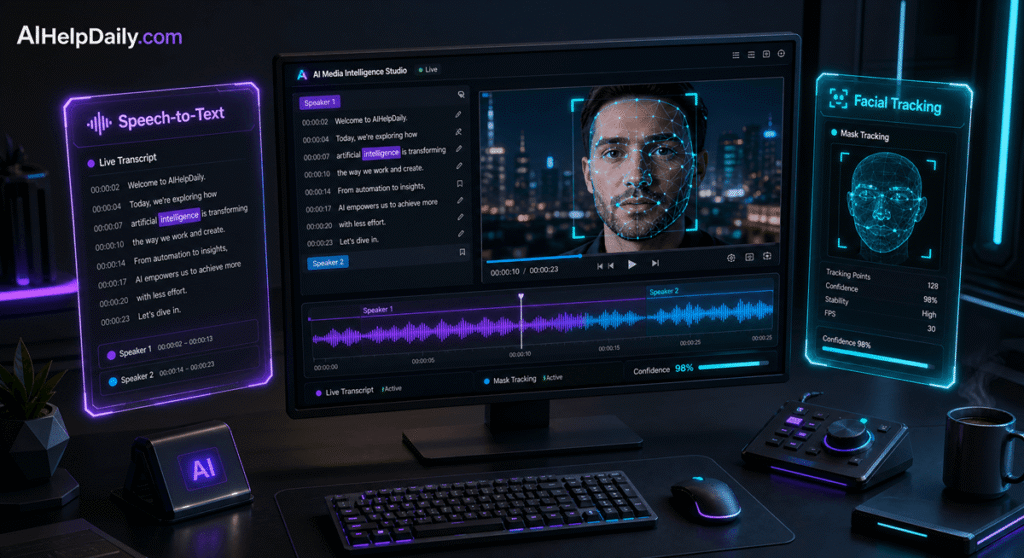
AI video editors are fundamentally redefining modern post-production pipelines, social video repurposing, and automated timeline workflows in 2026. In this detailed benchmark evaluation, we review top intelligent editing software to help you automate rough cuts, edit video via text transcripts, and generate viral vertical clips without tedious manual keyframing.
Table of Contents
- The Post-Production Shift: Introduction
- Key Parameters: Evaluating Intelligent Video Editing Suites
- The Best AI Video Editors in 2026 Reviewed
- Functional Deployment Across Creator and Studio Workflows
- The Heavy Render: Processing Load and Infrastructure Demands
- Conclusion: The Final Verdict
The Post-Production Shift: Introduction
The daily workflow of trimming silent pauses, manually syncing multicam audio tracks, keying green screens, and resizing horizontal videos into vertical aspect ratios has permanently evolved beyond manual timeline scrubbing. Video creators, post-production houses, and digital marketing agencies no longer spend hours executing repetitive timeline cuts.
In this dedicated industry evaluation, we benchmark top intelligent editing platforms to rank the best ai video editors operating in the 2026 media landscape. We evaluate their speech-to-text editing precision, automated silence and filler word removal, smart reframing capabilities, and multi-track audio mastering.

Key Parameters: Evaluating Intelligent Video Editing Suites
To properly evaluate modern ai video editors, creative directors and post-production engineers must look past basic auto-captioning and analyze true workflow acceleration. A production-ready AI editing platform must deliver sample-accurate text-based audio/video synchronization.
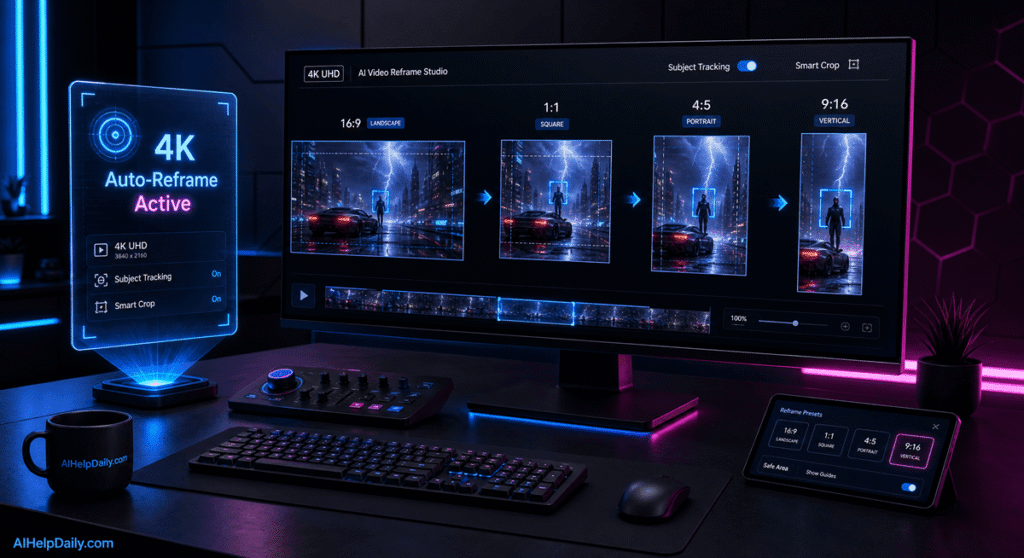
The underlying engine must automatically detect speaker switches, remove unwanted background noise with studio-grade neural isolation, and intelligently crop 16:9 widescreen footage into 9:16 vertical video while keeping subjects centered. Furthermore, an enterprise-grade editor must support native XML/EDL timeline exports for professional color grading suites like DaVinci Resolve.
The Best AI Video Editors in 2026 Reviewed
1. Descript
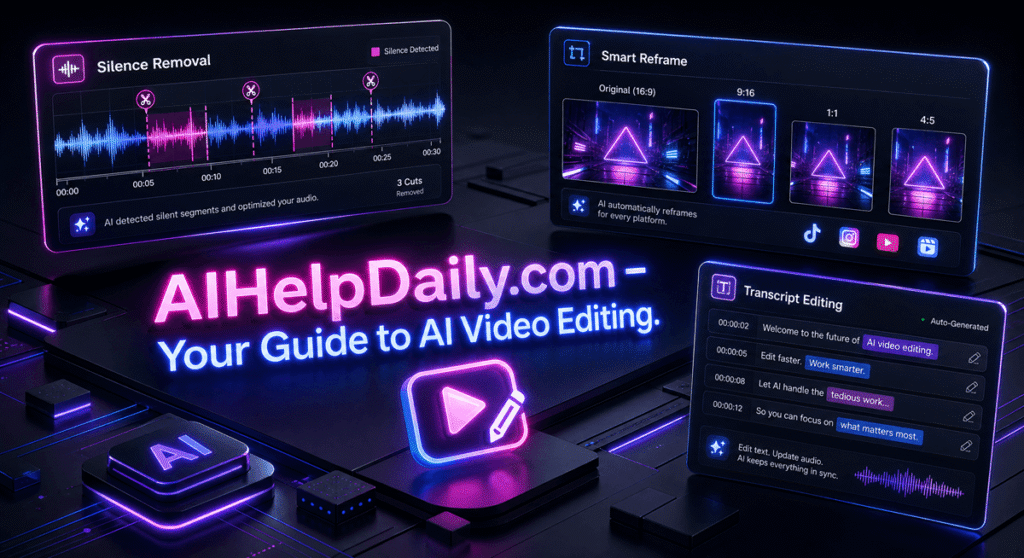
Descript stands as the undisputed pioneer of text-based video editing and collaborative podcast production. By transcribing recorded video into editable written text, Descript allows creators to edit video footage simply by highlighting and deleting words, automatically removing filler words (“um,” “uh”), leveling audio with Studio Sound, and generating synthetic eye-contact corrections in one click.
2. Adobe Premiere Pro (Firefly Video Intelligence)
Adobe Premiere Pro combines decades of industry-standard timeline editing with deep generative AI capabilities. Powered by Adobe Firefly, Premiere Pro offers generative extension to add frames to clips, intelligent scene edit detection, text-based rough cut assembly, and automated color matching across varied camera profiles.
3. DaVinci Resolve (DaVinci Neural Engine)
DaVinci Resolve sets the benchmark for professional Hollywood-grade post-production enhanced by local neural acceleration. Featuring the DaVinci Neural Engine, it delivers automated voice isolation, magic mask rotoscoping, facial refinement tracking, and speed warp motion interpolation directly on local workstation GPUs without cloud subscription fees.
4. Opus Clip
Opus Clip dominates the automated video repurposing market for social media growth. Utilizing conversational intelligence algorithms, Opus Clip analyzes long-form podcasts, webinars, and YouTube videos, automatically identifying the most engaging hooks and extracting short-form 9:16 clips complete with animated dynamic captions and virality scores.
5. CapCut Pro
CapCut Pro targets agile content creators, TikTok agencies, and mobile-first editors seeking rapid turnaround times. Packed with automated background removal, intelligent auto-beat syncing, smart motion tracking, and instant template styling, CapCut Pro enables creators to produce high-engagement videos in minutes.
Functional Deployment Across Creator and Studio Workflows
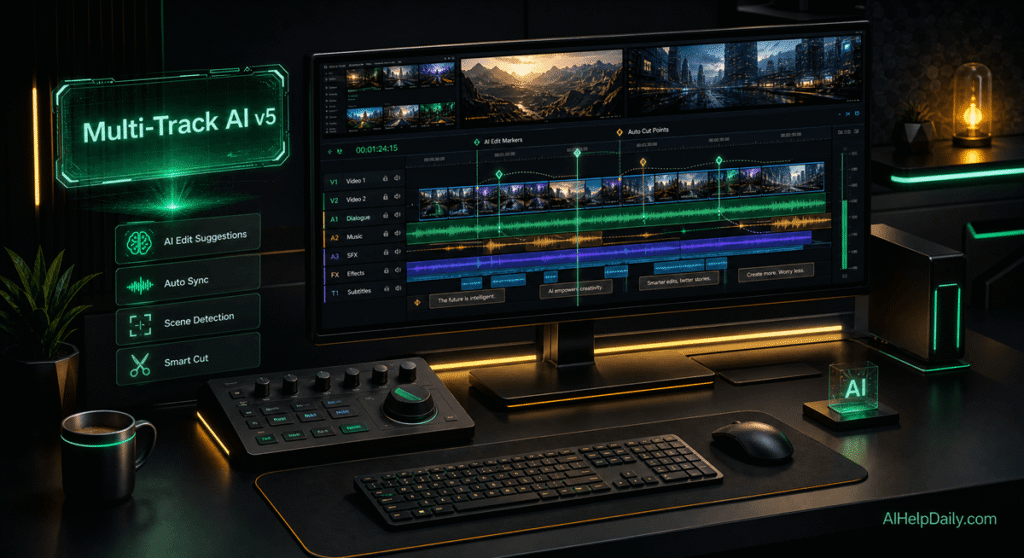
To help you isolate the ai video editors that best match your editing style, platform hardware, and export needs, review this capabilities matrix:
The Heavy Render: Processing Load and Infrastructure Demands
Executing multi-layer neural masking, speech transcription models, and high-bitrate 4K timeline rendering using modern ai video editors demands substantial local GPU acceleration and high-throughput cloud rendering infrastructure. Processing continuous timeline exports places persistent compute demands on digital media workstations.
This video processing load connects directly back to our pillar evaluations in our master best agentic ai tools guide, our best agentic ai frameworks breakdown, our best ai video generators review, our best real time ai voice changer breakdown, and our recent best ai music generators guide. Exploring how media production facilities manage these high-density neural video rendering workloads sustainably remains an essential priority for global technology leaders.
Conclusion: The Final Verdict
Selecting among top ai video editors depends on whether your workflow requires long-form podcast editing, Hollywood-grade visual post-production, or automated short-form social repurposing. For podcasters and educators seeking fast text-based video refinement with zero timeline friction, Descript is the premier modern editor. However, for film directors and colorists requiring uncompromising local GPU performance and neural rotoscoping, DaVinci Resolve delivers the definitive professional suite.
To explore more technical developer frameworks or discover platforms that scale your digital operational stack, visit our master AI Tools index or keep tabs on our continuous AI News weekly hub for ongoing industry breakdowns!