
AI memory tools are fundamentally redefining how autonomous software agents, personalized co-pilots, and enterprise customer assistants retain long-term state across multi-session conversations in 2026. In this detailed architectural evaluation, we review top persistent memory engines to help you synchronize episodic recall, eliminate context window limitations, and deploy self-updating agent memory layers without manual database plumbing.
Table of Contents
- The Stateless Bottleneck: Introduction
- Key Parameters: Evaluating Agentic Memory Systems
- The Best AI Memory Tools in 2026 Reviewed
- Functional Deployment Across Agentic and Enterprise Stacks
- The Heavy Compute: Processing Load and Infrastructure Demands
- Conclusion: The Final Verdict
The Stateless Bottleneck: Introduction
The primary limitation of traditional foundation models in production is their inherent statelessness. Once an inference session concludes, the model resets, losing user preferences, historical conversational context, and learned domain nuances. Forcing models to re-read entire conversation histories across every turn leads to runaway token costs, sluggish response times, and catastrophic context window exhaustion.
In this dedicated infrastructure breakdown, we benchmark leading persistent state engines to rank the best ai memory tools operating in the 2026 software architecture landscape. We evaluate their episodic memory extraction, semantic graph linking, real-time memory synthesis, and cross-platform SDK support.

Key Parameters: Evaluating Agentic Memory Systems
To properly evaluate modern ai memory tools, AI engineers and system architects must look past basic vector similarity searches and analyze structured state management. A production-ready memory framework must automatically extract facts, user preferences, and temporal relationships from raw conversational streams.
The underlying memory layer must distinguish between working memory (immediate session context), episodic memory (specific historical events), and semantic memory (generalized factual knowledge). Furthermore, an enterprise-grade agent memory suite must provide sub-50ms retrieval latencies, automatic contradiction resolution when facts change, and strict multi-tenant privacy isolation.
The Best AI Memory Tools in 2026 Reviewed
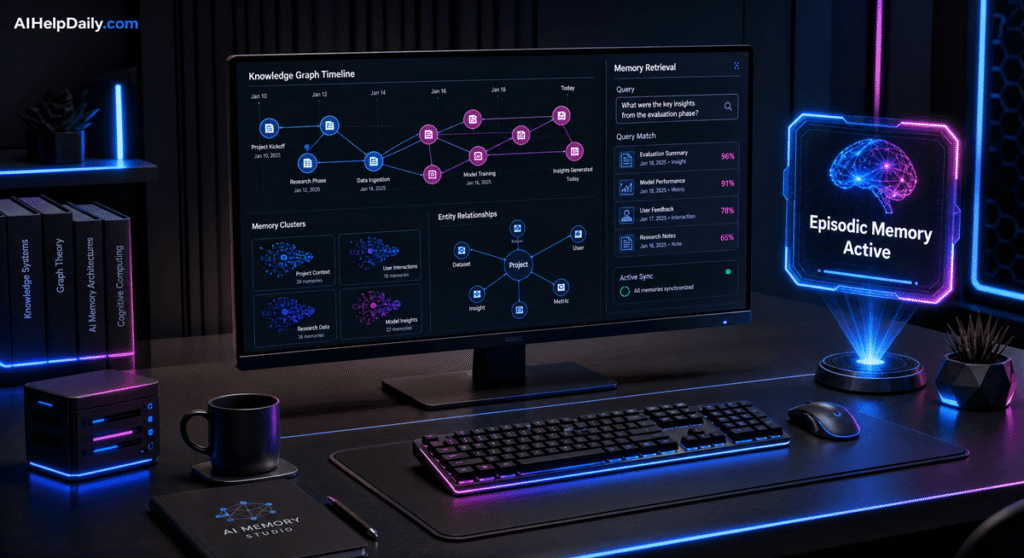
1. Mem0 (The Memory Layer for AI)
Mem0 stands as the premier universal memory layer for personalized AI assistants and autonomous agent workflows. Built with a scalable hybrid architecture combining vector search, graph relationships, and key-value state, Mem0 continuously extracts user preferences and operational facts from conversations, enabling agents to remember user context across applications with sub-20ms retrieval speeds.
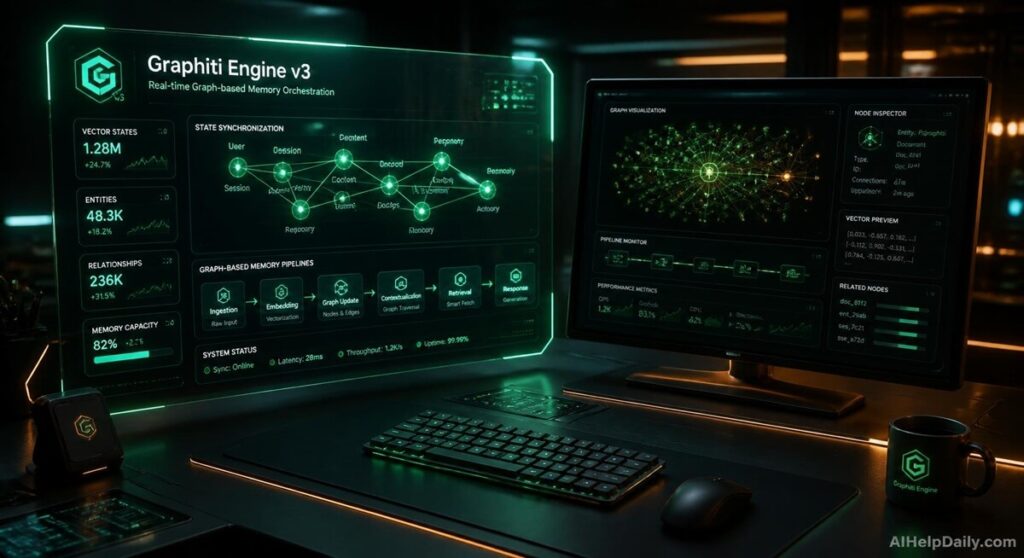
2. Zep (Graphiti Knowledge Graph Engine)
Zep sets the benchmark for enterprise long-term memory powered by dynamic temporal knowledge graphs. Featuring its Graphiti engine, Zep continuously maps entity relationships, tracks evolving facts over time, and resolves contradictions, providing conversational AI platforms with deep context awareness and zero context-stuffing latency.
3. Letta (Formerly MemGPT)
Letta delivers an advanced stateful operating system designed specifically for building stateful, long-running AI agents. Operating with hierarchical memory management (virtual context paging between fast RAM and persistent storage), Letta enables autonomous agents to edit their own memory files, manage multi-user sessions, and maintain perpetual continuity across infinite interactions.
4. LangGraph Checkpointing & Store
LangGraph Checkpointing provides native persistence and cross-thread memory for applications built within the LangChain and LangGraph ecosystems. By automatically taking snapshots of agent state at every execution graph node, it enables human-in-the-loop approvals, time-travel debugging, and seamless multi-session state synchronization out of the box.
5. Cognee
Cognee targets enterprise data teams and AI engineers who need to transform unstructured text, PDF documents, and business records into deterministic cognitive memory graphs. By structuring raw text into searchable network graphs, Cognee provides reliable factual recall for complex decision-making agents without semantic drift.
Functional Deployment Across Agentic and Enterprise Stacks
To help you isolate the ai memory tools that best match your architectural complexity, storage backend, and framework ecosystem, review this capabilities matrix:
The Heavy Compute: Processing Load and Infrastructure Demands
Managing continuous memory extraction loops, vector graph embeddings, and real-time state synchronization using modern ai memory tools places sustained computational demands on cloud database infrastructure. Serving low-latency memory lookups across millions of concurrent agent sessions requires dedicated storage optimization.
This persistent memory compute workload connects directly back to our comprehensive review of the best agentic ai tools, our best agentic ai frameworks breakdown, our best vector databases for ai agents guide, our best agentic ai coding frameworks review, and our recent best ai inference engines guide. Exploring how enterprise data infrastructure balances high-frequency memory indexing sustainably remains an essential priority for global technology leaders.
Conclusion: The Final Verdict
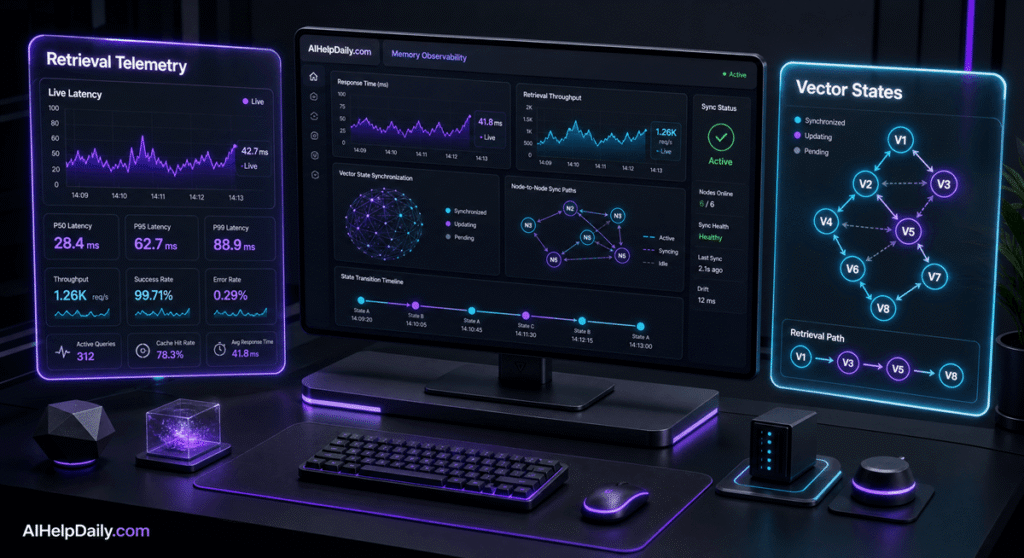
Selecting among top ai memory tools depends on whether your project requires lightweight user personalization or complex temporal knowledge graph reasoning. For development teams seeking fast, universal cross-session memory with simple API integrations, Mem0 provides the most versatile solution. However, for enterprise conversational platforms requiring deep relationship tracking and automatic factual updates over time, Zep with its Graphiti engine delivers the premier memory infrastructure.
To explore more technical developer frameworks or discover platforms that scale your digital operational stack, visit our master AI Tools index or keep tabs on our continuous AI News weekly hub for ongoing industry breakdowns!